Bear Hill Farm Pilot Project
The Capital Regional District (CRD) has partnered with LifeCycles Project Society to develop and maintain the Bear Hill Farm Pilot Project: a five-year project to reactivate underused agricultural lands for food production in the capital region.
Applications for farm businesses opening this fall! Scroll down to learn more about the project.
Project Goals
- Activate five acres of underutilized farmland to support agricultural use in the capital region.
- Explore efficient growth opportunities in local farming and agriculture through the use of unused public land
- Develop a model that could be replicated with other underutilized farmland.
Our Vision
To provide tenured land access to established farm businesses
Early- to mid-career farmers who plan to farm for the long-term, and either require additional land to fulfill their business plans or who have lost their land access.
To support farmers through a collaborative environment.
To work together for the success of the pilot project with the goal of extending into the future.
To improve food security and resilience in the region.
To promote the long-term sustainability of regional food security.
Our Regional Context
Farmers in the capital region are quickly aging out of the field. As the region’s population grows, farm land is increasingly being valued for potential development, leading to skyrocketing land prices in recent years. As a result, young farmers and newcomers to the agricultural field are experiencing a shortage of affordable and accessible land, despite that secure land access is essential for successful farming operations.
While there are a number of successful incubator farm projects in the region, without accessible land to transfer their farm businesses to, farmers are leaving the capital region to procure sustainable land access elsewhere, or leaving agriculture entirely. Without support, farm businesses in the capital region are not set up for success to meet regional food security goals.
Farm Business Applications
Applications for farm businesses to apply for land at the Bear Hill Farm Pilot Project are set to open mid-November 2026.
Join our newsletter to stay updated on the project, application release, site tours, and more information.
About the Farm Site
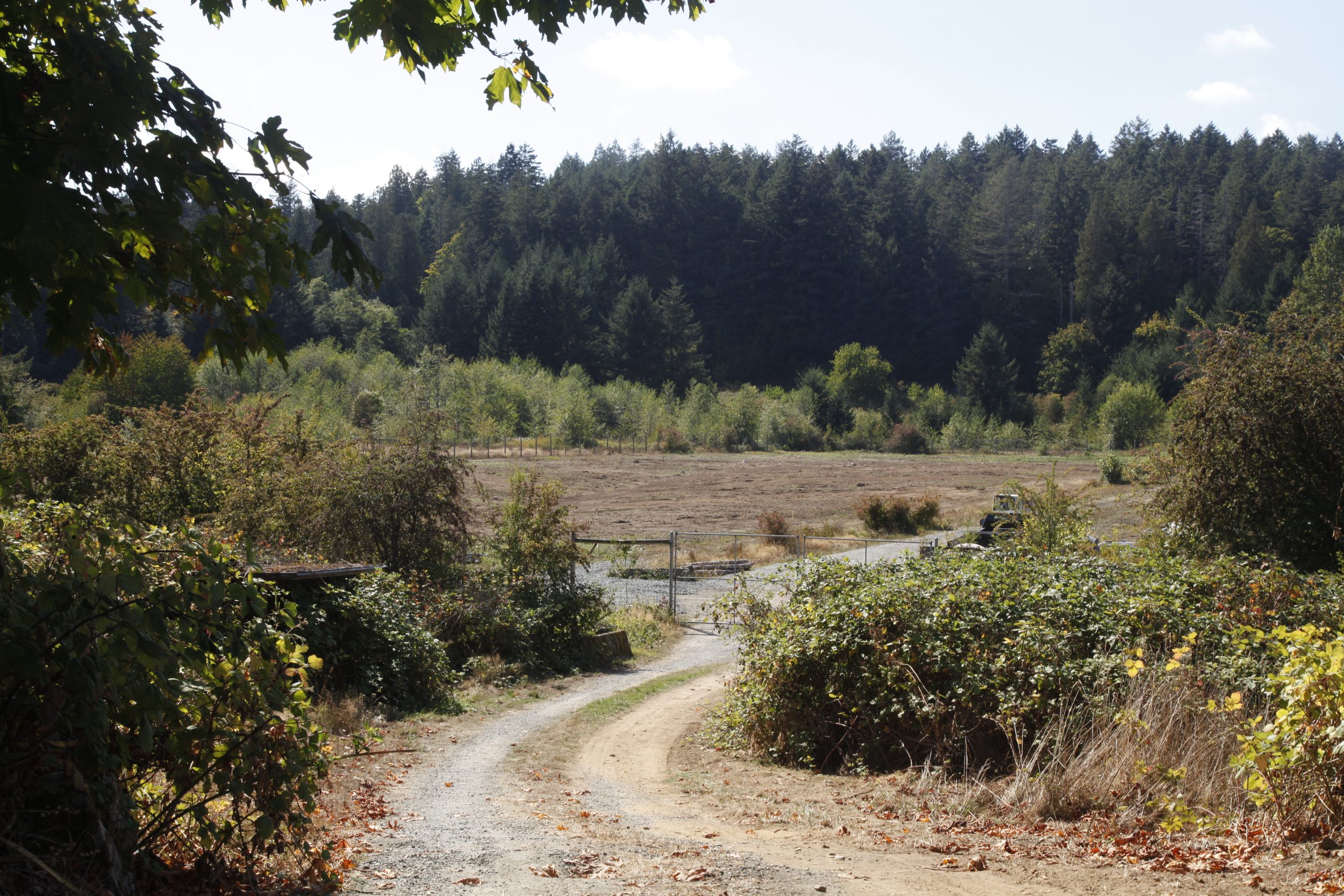
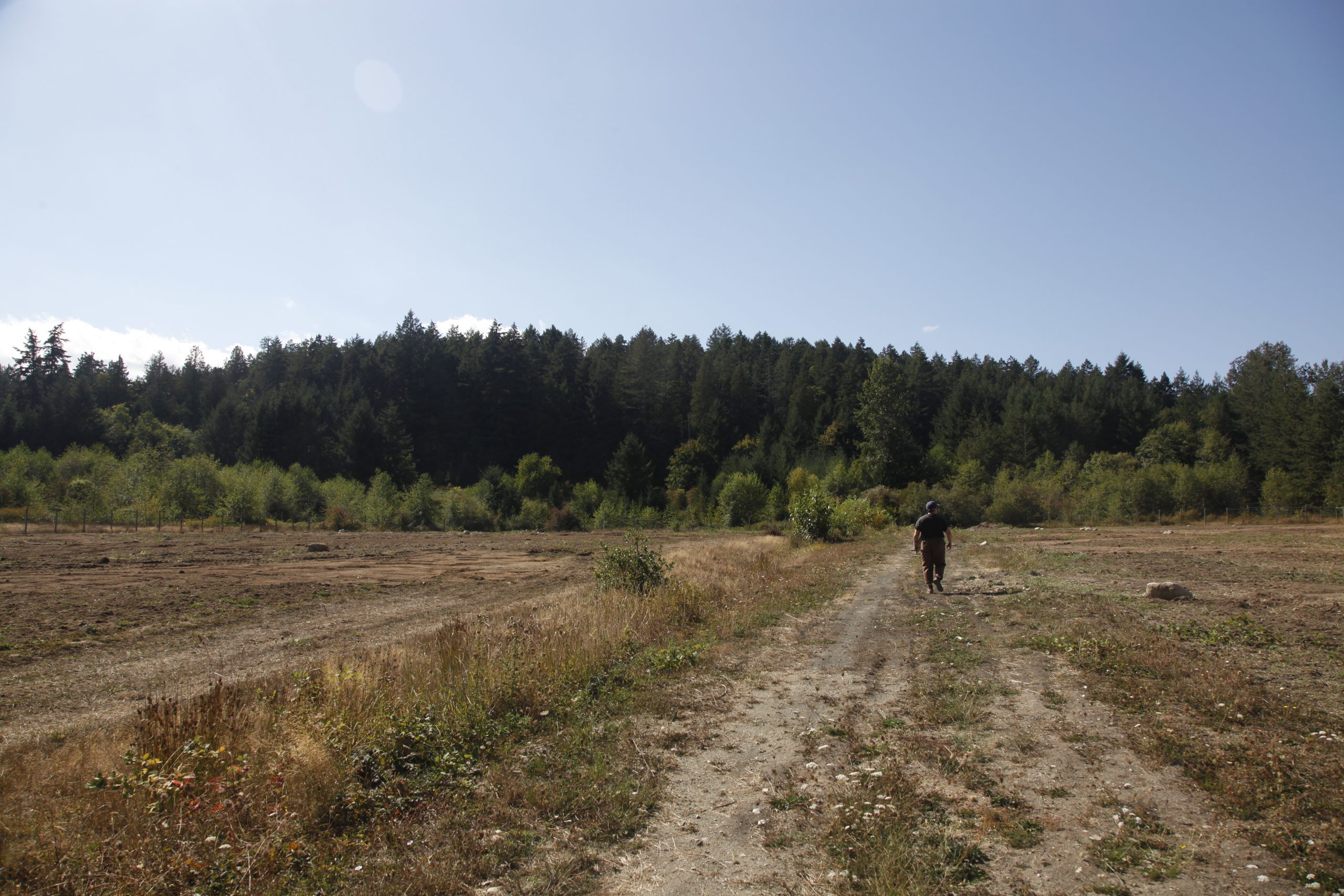
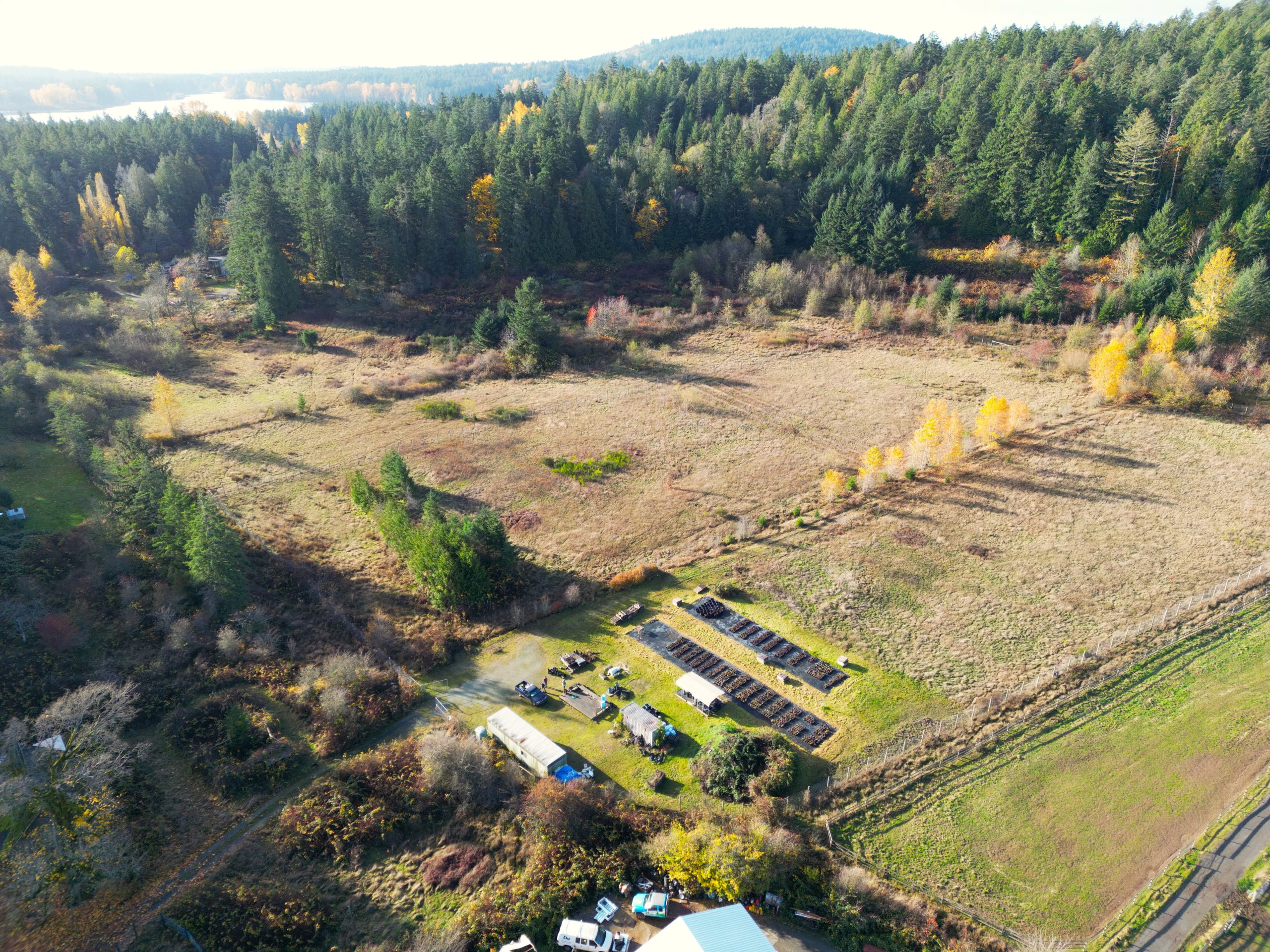
The Bear Hill Farm site is located within the Agricultural Land Reserve (ALR). The property is situated on the north east corner of Bear Hill Regional Park, which is owned and operated by the CRD. The property includes a five acre farm area that is enclosed by deer fencing. It is located on the west side of Patricia Bay Hwy just north of Elk/ Beaver Lake.
Farm Site Address
5920 Patricia Bay Hwy, Victoria, BC ↗
Please note that the farm site is not open to the public.
Farm Access & Infrastructure
The property has good overall access and includes a gate, central field access lane, and a gravel loading and staging area. The property includes a farmhouse which will provide kitchen, washroom, and office access to farm business operators. Capital improvements are underway to create shared infrastructure for farm businesses including: a propogation tunnel, walk-in coolers, and wash and pack sheds. The property is serviced by a municipal water line, and electricity for farm infrastructure establishment is provided inside farm boundaries.
Soil & Land
The site has been fallow for nearly a decade. It has good soil that is being amended for ideal growing conditions as part of the projects site development. Whisky Creek runs across the east side of the farm site. The site has existing drainage that is being remediated to ensure its integrity. It is surrounded by robust biodiversity, supporting the farm’s ecology.
Land Acknowledgement
The Bear Hill Farm Pilot Project site is located on the unceded, ancestral, and present-day territory of the W̱SÁNEĆ peoples, namely the W̱JOȽEȽP (Tsartlip) First Nation and the SȾÁUTW̱ (Tsawout) First Nation. Their relationships with this land is ancient, ongoing, and rooted in deep knowledge of its waters, soils, and life. The site is surrounded by forests of Douglas Fir, Garry Oak, and Arbutus trees, and is adjacent to Whiskey Creek in the Colquitz River Watershed. Prior to colonization, the W̱SÁNEĆ peoples relied on reciprocal relationships with the land, and on complex, communal systems of stewardship rather than Western concepts of private property.
We recognize that many of the plants, practices, and landscapes we work with today are shaped by colonial histories that displaced Indigenous food systems and relationships to land. We acknowledge these ongoing impacts, and commit to tending the land in ways that support soil health, biodiversity, and resilient local food systems, while learning from and respecting Indigenous knowledge, and working toward more just and reciprocal relationships with the land and people of these lands.